

Fintech on the Rise: How the $500 Billion Blockchain Market Will Shape Payments by 2027
.avif)
Introduction:
Blockchain’s Fintech Revolution: The $500 Billion Opportunity
The Blockchain market in fintech is on an unprecedented trajectory, set to reach $500 billion by 2027. In the last decade, blockchain has transformed the way digital transactions, payments, and financial services operate globally. But beyond the initial excitement over cryptocurrencies like Bitcoin and Ethereum, the true power of blockchain lies in its ability to revolutionise cross-border payments, security, and the Decentralised Finance (DeFi) ecosystem.
As traditional payment systems are being strained by inefficiencies, fraud, and a lack of transparency, blockchain’s decentralised nature promises a new paradigm for financial transactions. This blog will explore the exponential growth of blockchain in fintech, with a focus on the upcoming trends, projections, and the key players shaping the future.
The Unstoppable Growth of Blockchain in Fintech
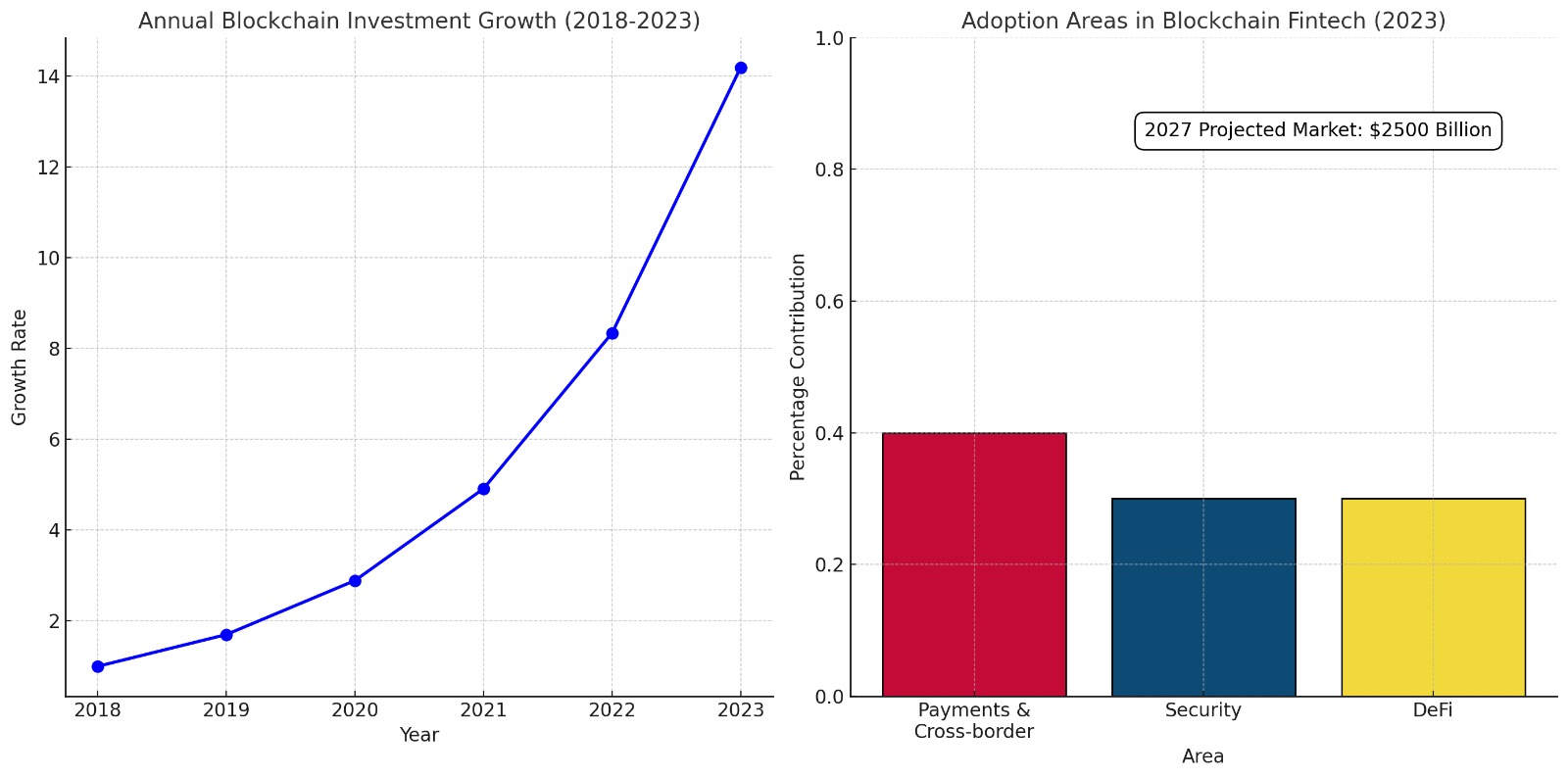
Blockchain technology is moving from the periphery to the mainstream. From 2018 to 2023, global blockchain investments have grown by over 70% annually, and the market is expected to keep expanding, with forecasts showing a 5x growth by 2027. According to PwC’s 2023 report, 88% of executives in the fintech industry believe blockchain will disrupt traditional financial services within the next decade.
The $500 billion market projection is a reflection of the rising adoption rates across the following areas:
- Payments & Cross-border Transactions: Blockchain technology’s ability to reduce transaction times from days to minutes has become a key driver for the fintech sector.
- Security: Blockchain’s tamper-resistant features are becoming essential for enhancing financial data integrity, fraud prevention, and cybersecurity.
- DeFi (Decentralised Finance): DeFi is redefining traditional banking by offering open, permissionless financial products without intermediaries, increasing liquidity in unbanked regions.
By 2027, blockchain’s role in fintech will extend beyond cryptocurrency, embedding itself across the financial value chain.
Blockchain’s Impact on Cross-border Payments: A Game-Changer for Global Transactions
One of the most powerful applications of blockchain in fintech is cross-border payments. According to a 2024 report by McKinsey, $25 trillion in cross-border payments are made annually. This market is plagued by issues such as high transaction costs, slow processing times, and hidden fees that blockchain is uniquely positioned to solve.
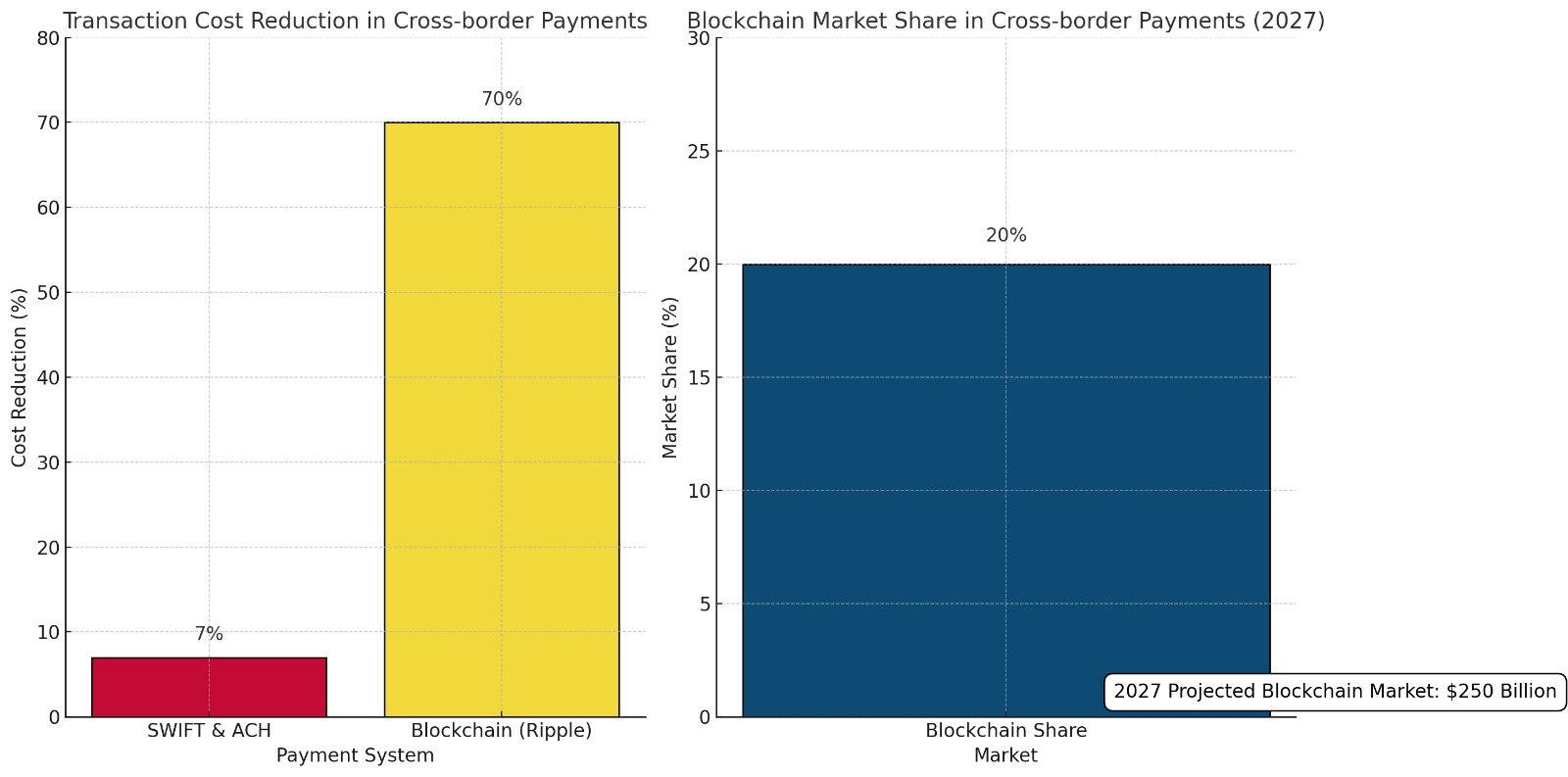
Blockchain Reduces Cross-Border Payment Costs by 50–70%
- Current systems like SWIFT and ACH charge transaction fees of up to 5–7% for international transfers. Blockchain, with its decentralised infrastructure, is expected to cut costs by up to 70%. By leveraging blockchain’s distributed ledger technology (DLT), payments can bypass intermediaries, reducing costs significantly.
- Ripple Labs is a prime example. Their blockchain-powered network, RippleNet, is used by major financial institutions like Santander and PNC Bank, enabling real-time payments across borders at a fraction of the cost. Ripple’s cross-border payment volume is expected to exceed $10 billion by 2027.
Projections for Blockchain’s Market Share in Cross-border Payments
By 2027, blockchain’s share of the global cross-border payment market is expected to reach 20%, with estimates predicting a $250 billion blockchain-based payments market. Players like Ripple, Stellar, and IBM’s World Wire are leading the charge, offering blockchain-based solutions that enable low-cost, fast, and secure international transfers.
Blockchain’s Role in Revolutionising Security and Data Integrity
The rapid rise of cybercrime and fraudulent activities in financial services has prompted the need for next-gen security solutions. Blockchain’s immutable ledger ensures that transaction data is permanent and tamper-resistant, making it an ideal solution for financial security.
Blockchain-Based Fraud Prevention
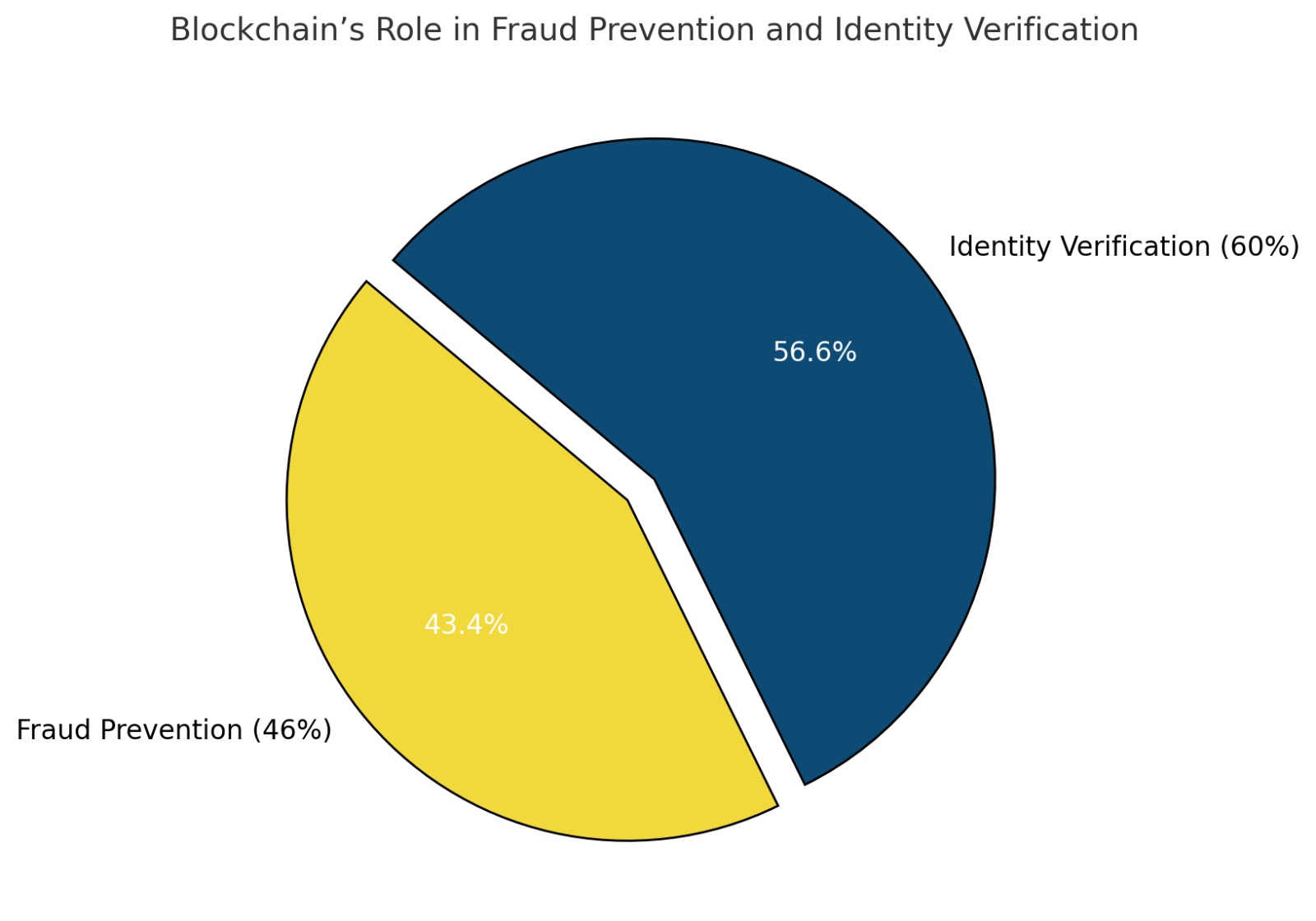
- Kaspersky’s 2023 report indicated that 46% of financial institutions experienced data breaches or attempted fraud attacks, costing the sector an estimated $60 billion annually. Blockchain technology can reduce the chances of fraud by ensuring that every transaction is cryptographically sealed, with its history traceable on the blockchain.
- Cybersecurity firm Chainalysis reported that blockchain is making it easier for companies to track the movement of digital assets in real-time, mitigating fraud risks. The decentralised nature of blockchain ensures that any attempts to alter or reverse a transaction are immediately flagged by the network.
- Blockchain-powered identity verification is also gaining traction. By 2026, it’s projected that over 60% of financial institutions will use blockchain for identity management and Know Your Customer (KYC) procedures, reducing the risk of identity theft and money laundering.
Decentralised Finance (DeFi): A Disruptive Force in the Traditional Banking System
The rise of DeFi (Decentralised Finance) is one of the most disruptive aspects of blockchain technology. DeFi eliminates the need for traditional financial intermediaries like banks or brokers by enabling peer-to-peer transactions.
$250 Billion DeFi Market by 2027
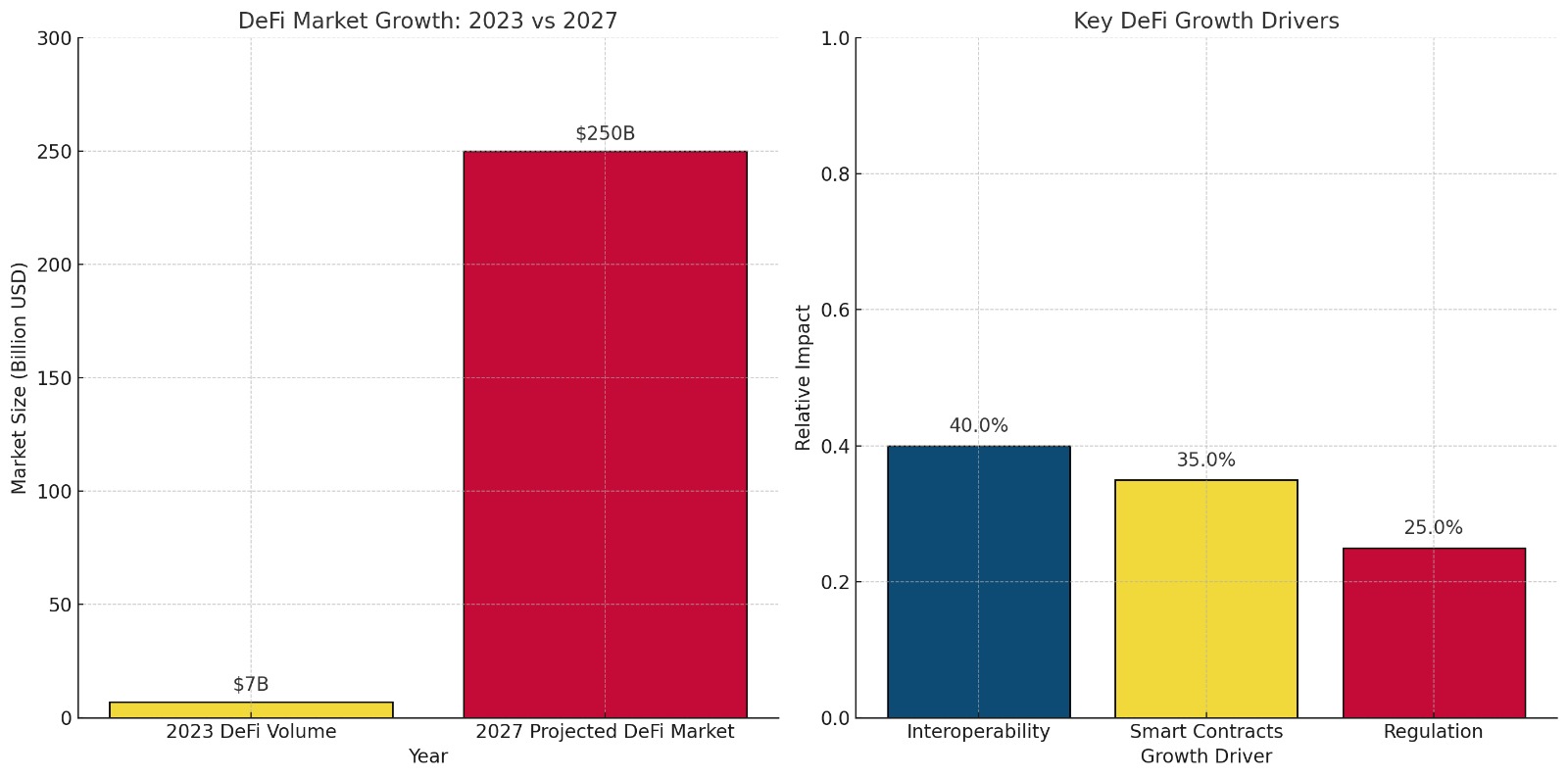
- DeFi is expected to reach a $250 billion market by 2027, driven by peer-to-peer lending, yield farming, and decentralised exchanges. In 2023 alone, DeFi platforms processed $7 billion in total transaction volume, doubling the volume from just 2022.
- Platforms such as Uniswap and Aave have seen rapid growth as they offer transparent lending, borrowing, and trading without the need for third parties. DeFi’s ability to offer unbanked populations access to financial services is opening new markets in emerging economies.
Key DeFi Growth Drivers:
- Interoperability: Blockchain networks like Polkadot and Cosmos are leading efforts to create cross-chain compatibility, making it easier for assets to flow across different platforms.
- Smart Contracts: Ethereum, the leading blockchain for DeFi, is expected to grow its market share, with smart contract adoption increasing by 35% year-over-year.
- Regulation: As governments begin to introduce regulatory frameworks, DeFi is becoming more structured, opening up new investment opportunities.
Emerging Blockchain Players to Watch in 2024 and Beyond
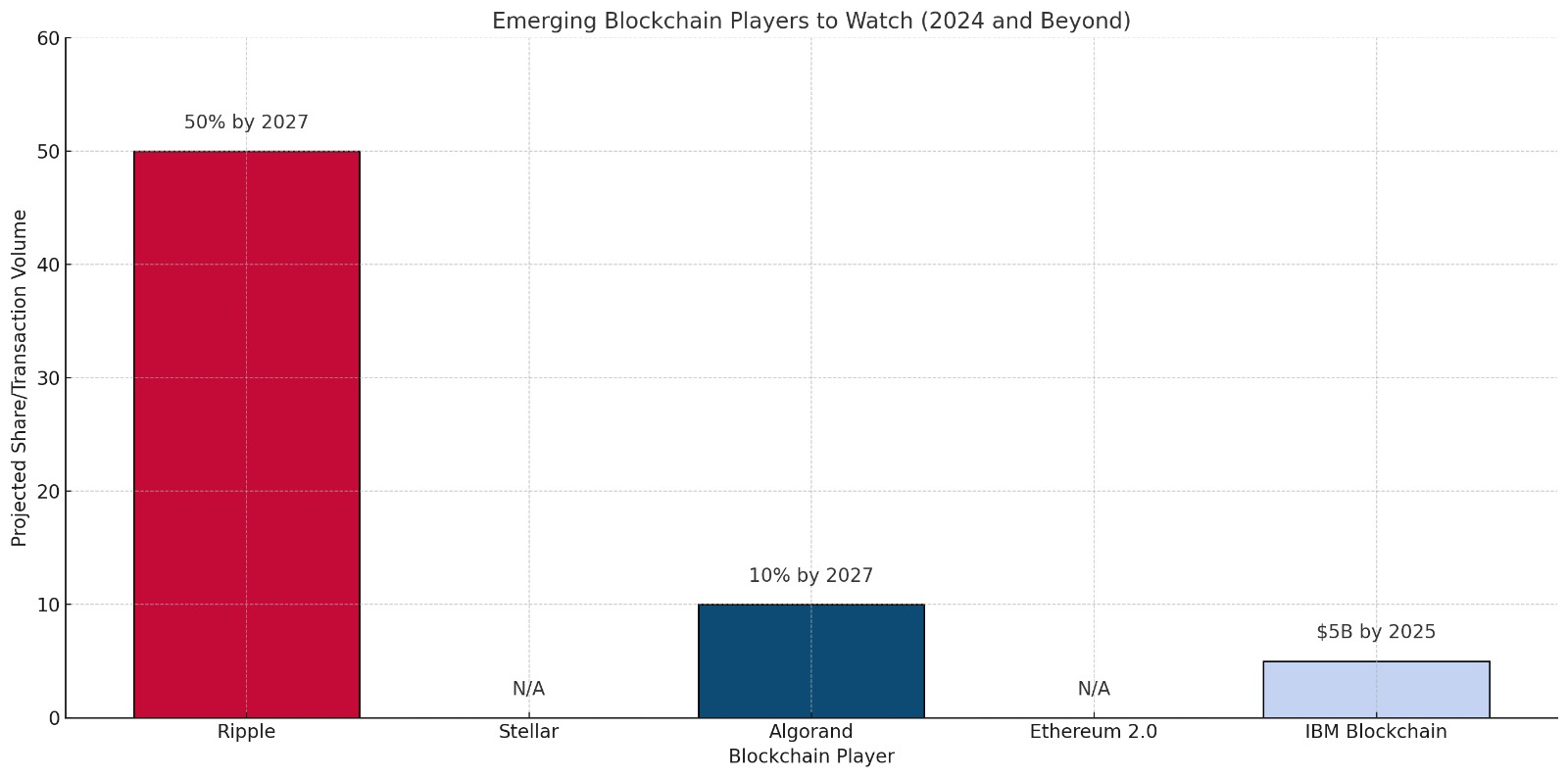
The fintech space is buzzing with innovation, and several blockchain-based platforms are poised to become industry leaders. Here are some of the key players to keep an eye on:
- Ripple Revolutionising cross-border payments with RippleNet. By 2027, Ripple expects to handle 50% of global cross-border transactions.
- Stellar offers solutions for fast, low-cost transactions, with a focus on developing countries and remittances. Stellar’s partnerships with IBM’s World Wire are expected to scale rapidly.
- Algorand is Pioneering scalability and security in blockchain for payments, aiming to capture a 10% share of the global blockchain payments market by 2027.
- Ethereum 2.0 With Ethereum’s migration to Proof-of-Stake, the network is set to become a key enabler for DeFi applications, attracting a growing base of developers and investors.
- IBM Blockchain IBM’s blockchain solutions for supply chains and cross-border payments are transforming enterprise-level transactions. By 2025, IBM projects to handle $5 billion in annual blockchain-based transaction volume.
Why Blockchain is the Future of Fintech Payments
The $500 billion blockchain market will reshape the payments landscape by 2027. With blockchain providing faster, cheaper, and more secure alternatives to traditional financial systems, the industry is poised for explosive growth. Key drivers such as cross-border payments, security, and DeFi will continue to push the market forward, creating new opportunities for businesses, investors, and consumers.
For fintech companies, adopting blockchain technology is no longer optional; it’s a competitive necessity. As the blockchain ecosystem matures, staying ahead of the curve with new developments and key players will be crucial for any firm looking to capitalise on the industry’s growth.

68 Circular Road, #02-01 049422, Singapore
Revenue Tower, Scbd, Jl. Jenderal Sudirman No.52-53, Jakarta 12190, Indonesia
4th Floor, Pinnacle Business Park, Andheri East, Mumbai, 400093
The Yard, 3rd Floor, A wing No 1, Carlton Towers, HAL Old Airport Rd, Indiranagar, Bengaluru, Karnataka 560008.


